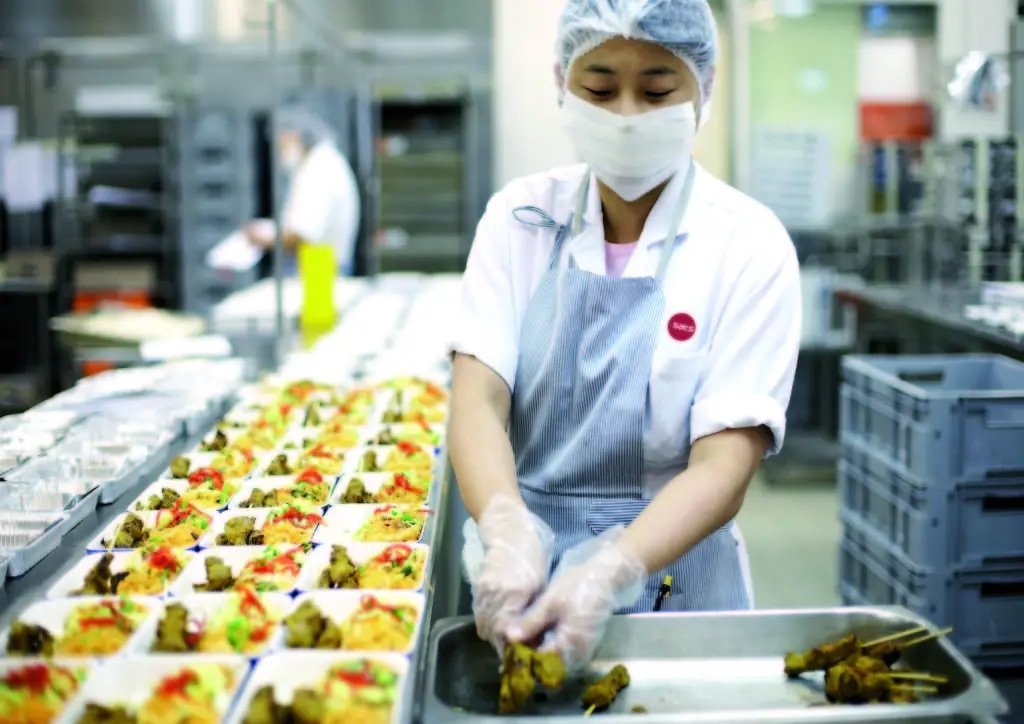

 Airline Catering Process at Cinnamon Kitchen
Providing world-class airline food requires a perfect balance of nutrition, flavor, and logistics…
How do you offer quality meals to tens of thousands of passengers every day—meals that will be eaten hours later, reheated, and served at cruising altitude?
How can you produce hundreds of meal varieties, address special dietary needs, and meet the food preparation requirements of the world’s religions, all in time for hundreds of flights departing day after day?
And how do you ensure consistency, quality, variety, and food safety?
These are the challenges facing the world’s airline catering firms.
We found answers when we joined a select group of journalists for a guided tour of Cinnamon’s kitchen.
Managing Scale and Complexity
To manage demand for tens of thousands of airline meals each day, the Cinnamon catering kitchen employs the same standardised manufacturing processes and inventory control systems used by aircraft manufacturers that build the planes on which Cinnamon meals are served.
Of course, food preparation brings additional complications, including:
Handling perishable ingredients
Ensuring strict food safety standards
Maintaining consistent quality
Avoiding food waste
Accommodating very short lead times
 Chefs Under Pressure
Before any of that, Cinnamon’s chefs must ensure that the food delivered to passengers is both satisfying and appetising.
Preparing airline food that looks good and tastes good requires creativity. Executive chefs and executive sous chefs develop recipes in laboratory kitchens, then test them in a simulated aircraft cabin. This environment recreates cabin pressure equivalent to flying at 30,000 feet.
Once their palates are affected by the pressurised environment, chefs sample their creations and discuss adjustments needed to achieve the right flavour.
Some chefs spend hours in a room that feels more like a submarine than a conference room—sampling, adjusting, and refining recipes until they meet exact standards.
 Dishes Made to Measure
Once recipes are perfected, chefs define precise standards for preparation and presentation. No detail is too small.
Every element is measured and controlled, including:
The size and weight of meat cuts
The exact amount of rice and vegetables
The volume of sauce
Even the number of peas on a plate
Assembly, Cooling, and Quality Control
In the industrial kitchens:
Conveyor belts carry large trays of mains and sides to specialised cooling units
Food is rapidly cooled to safe temperatures
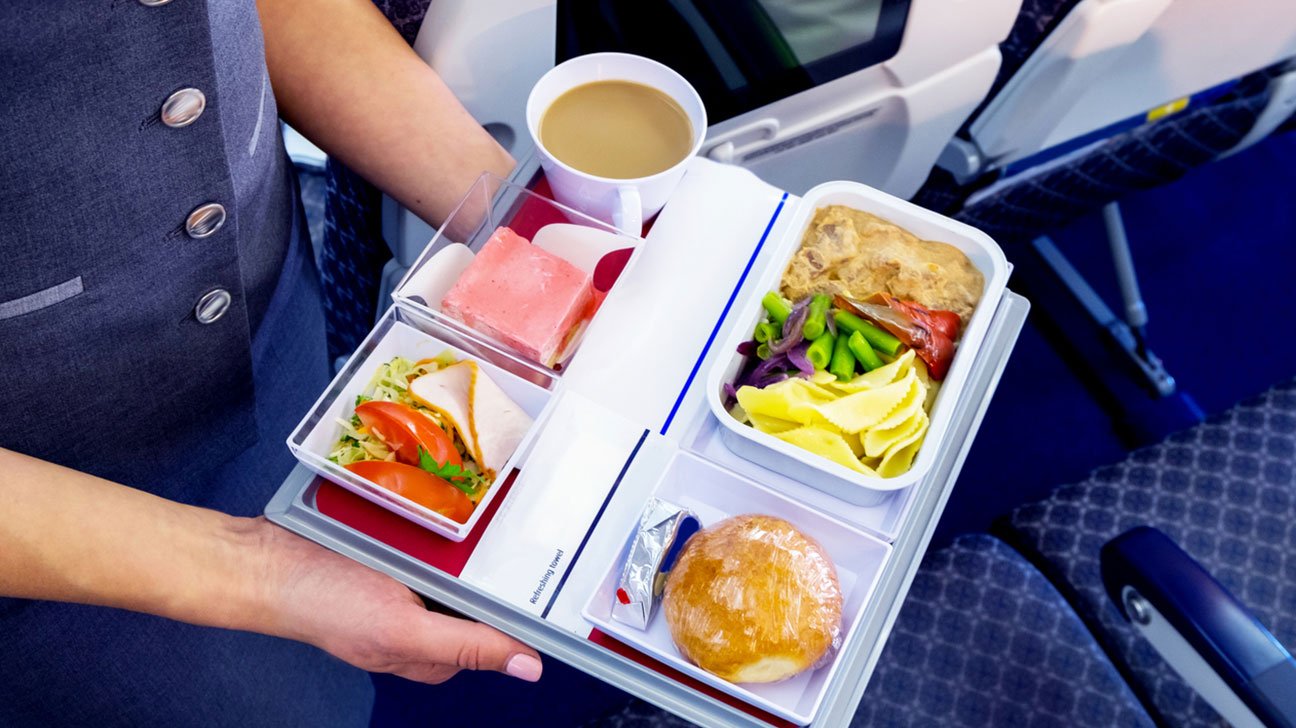
Dishes are assembled, plated, and loaded into trays
Trays are packed into long rows of galley carts, where they remain until flight attendants reheat and serve them onboard
Ingredients are ordered in bulk from around the world and stored in automated, specialised warehouses. These ingredients are released only when work orders trigger their transfer to distribution.
Order processing is controlled through sophisticated enterprise resource management systems, while quality control oversight is constant. Kitchen staff work strictly within the clearly defined parameters of each recipe’s work kit.
Precision on the Production Line
At the assembly stage, a master sample dish is prepared. Every other dish is measured against this standard.
Experienced line workers require very little guidance. We observed one worker return three slices of carrot to a tray—she knew instantly, without weighing, that there were three too many.
Even so, floor supervisors maintain constant oversight and are always ready to resolve issues that could delay the next stage of production.
Precision on the Production Line
At the final assembly stage, a master sample dish is prepared. Every other piece of airline food is measured against this standard. Experienced line workers require very little guidance; we observed one worker return three slices of carrot to a tray—she knew instantly that there were too many. Floor supervisors maintain constant oversight, ensuring Cinnamon remains a leader in the global catering industry.